Showing posts with label Kenya. Show all posts

Sunday, February 21, 2016

With A Heavy Heart


I thought the Maasai Mara Game Reserve was the most magnificent thing I’d ever seen… until I looked up.  Having (sort of) conquered my nighttime toileting fears, I almost enjoyed my 3:00 am venture through the dozing cows when I suddenly remembered my beloved universe.  There, in the African summer sky seemingly inches above my head, was the equatorial Milky Way.  It was glorious.  There were twinkling stars, and red stars, and shooting stars, and fuzzy stars.  Night shimmied in her starry gown as she danced between the horizons, illuminated by light billions of years old.  I was transfixed, and not a little abashed: the heavens were once again lighting my way.

My celestial romance has become the metaphor of my experience here in Kenya.  When I think I can’t be further intrigued, I meet lively sister wives of the same husband.  When I think I can’t handle more intense beauty, I lose my staring contest with a daddy giraffe, only because he’s dissolving into the tears suddenly hanging from my lashes.  When I think I have no more patience, I find myself surrounded by dozens of staring children, all of whom try to simultaneously touch me.  Breathe Katie, breathe.  When I think I can't be more broken, I watch toddlers wander trash-strewn streets alone in search of food.  When I begin to question the integrity of some with good intentions, I meet teachers who are doing the grueling work of integrating disabled students into their classrooms, trailblazing in a country where the powerful stigma of disability is often commuted to a life sentence of shame.  They are heroes and their commitment restores my hope.

I’d be lying if I said there aren’t reunions I’m looking forward to.  My people.  Coffee.  Plumbing.  A hot bath.  Chocolate.  Coffee.  Long walks.  Wine and beer!  Salad.  Dancing.  Coffee.  If I’m honest, even other mzungus.  The market comes to a screeching halt as vendors openly gape, children chase my car screaming “mzungu, mzungu”, babies burst into fearful tears certain I’m a ghost.  It’s uncomfortable and isolating, experiencing life as a minority.  As the only person devoid of the deeply rich color of my Kenyan friends, I now have the smallest insight into what my friends of color regularly experience at home.  And I’m humbled.

Like the other lessons I’ve learned here though, it enforces what I already believed: that under our race and culture and ethnicity, we’re more alike than we are different.  Parents everywhere want their children to be educated and fed and safe.  Children everywhere want to run and learn and explore.  Teachers everywhere want to help and teach and transform.  Humans all want to belong and befriend and believe.  And maybe all of us, every once in awhile, just want to pee under the galaxy. 

*I will post with minimal photos until I have enough wifi to upload more, thanks for your patience!!

Sunday, February 14, 2016

To Sirua Aulo Academy


Perched on a hill overlooking the Rift Valley sits a school, a school set apart by more than it’s idyllic location high in the Transmara.  This is a school that defies a corrupt governmental education system by achieving the highest marks in the county, three years running.  This is a school that defies tribal conflict by intentionally pursuing diversity, including over seven tribal ethnicities among both staff and students.  This is a school that defies the injustice of poverty by educating orphans through sponsorship, orphans who make up nearly a third of their student body.  This school is Sirua Aulo Academy (SAA).

Founder, Director, Friend, Emmanuel
I was sent here in the capacity that my background as a Speech Pathologist could be helpful, as SAA is determined to include children of all abilities.  This too is anomalous in Kenya, as the stigma of disability runs deep and often results in children being secreted away by parents motivated by fear and misunderstanding.  While I did my best to build some programming to contribute to this vision, I mostly just tried to learn as much as I could from these remarkable teachers and students who were gracious enough to invite me into their world. 


I was daily blown away.  Emmanuel is a quiet man of commanding presence, a real community leader.  His office was a constant revolution of parents, teachers, and students: always students.  Some to peruse his loaded bookshelves while others scattered around him to eat their lunches, still others simply to receive the palm of his hand to their little foreheads, a blessing within a greeting, the way of the Maasai.  And in the midst of it all, he made the time each morning to take chai together as he gently helped me understand all I was experiencing.


Six days a week, SAA teachers begin their sessions at 5:00am and end at 9:00pm; theirs is a boarding school like most schools in the country, but not once did I hear a complaint.  They have upwards of 60 students in their classrooms, all of whom are eager to learn, some of whom share both a chair and a desk.  They have neither electricity nor plumbing, but rely on solar panels to generate their evening light and the river two kilometers away for their washing: though they’ve successfully drilled a well, they have not yet raised enough funding for a pump.  On top of their rigorous schedule, SAA teachers believe in wholistic education, and work towards that end by incorporating both a virtue and a mentorship program to ensure maturity beyond academic.  Their effort is clearly not lost: SAA students are, without exception, charming little humans. 


As luck would have it, my last day coincided with  SAA’s Thanksgiving celebration, a day when the entire community gathers to honor the year’s successes and generate dreams for the future. Children, chiefs, and generations came together in tribal dance and song, in prayers and blessings, in speeches and trophies, in bestowing full scholarships on deserving young women to attend secondary school.  A bull was slaughtered alongside buckets of chapati as families posed for photos and children proudly introduced mamas to teachers.  This year we also celebrated the grand opening of Sirua Aulo High School.  Maasai, Kisii, and Kipsigis will no longer engage in tribal turf wars on the adjacent hillside, but like the rest of SAA students, will sit alongside one another and learn how to change the world.  Sirua Aulo Academy showed me that hope for the future is one student at a time, empowered and supported by a beautiful brightly-beaded community, a community to whom I'm incredibly grateful.  Asante sana friends, asante sana


To find out more about how you can become involved in what Emmanuel and his team are accomplishing in rural Kenya, visit siruaauloschools.sc.ke

Friday, February 12, 2016

On Safari!


Doug is a dear friend and mentor from Chicago, and was the first person who helped me believe in myself to make this trip a reality.  He is married to another dear friend Nicole, and together they parent Arabella and her soon-to-arrive sibling.  They’ve traveled all over the world, lived in Kenya for several years, and are my go-to people for all sorts of things.  Unbeknownst to him, Doug has also become a bit of a model of the kind of man I’d like to find someday; together he and Nicole give me hope for marriage.  So when Doug told me the Maasai Mara was a must, I believed him.

Our safari began several hours before dawn as Emmanuel and I began the monster truck off-roading that is driving in Maasai Kenya.  As we edged closer to the reserve entrance, Emmanuel pulled off the road and announced this is where we’d picnic for breakfast: I nearly had a heart attack.  My adrenaline had been surging since the night before as I laid awake imagining elephants and lions and hippos: I hadn’t slept a wink.  Were we supposed to get out of the car?  Wouldn’t the lions smell our chai and eat us for breakfast?  What the hell is that noise?


Laughing, he laid a shuka down as a blanket and explained the dreadful noise was in fact a lion, but a lion in pain.  It was a haunting kind of bellowing, and a sad relief when the poor beast finally fell silent.  As he pointed out the impalas and zebras hiding shyly among the surrounding trees, he shared stories of growing up on this magical family property.  He talked of racing giraffes and protecting livestock from lions, his deep love and respect for his animal neighbors clearly evident.  For me, safari was an exotic lifelong dream.  For Emmanuel, safari was his home and I was honored to be his guest.

It was as enchanting an experience as I’ve ever had, and one I’ll never forget.  Emmanuel’s laser vision was a nice complement to my googly eyes, and together we saw it all.  In the wild, giraffes are as big as dinosaurs and painfully beautiful.  I learned not to test a mama elephant’s patience, and that some birds look like Fruit Loops.  I now know what a lioness smells like after she’s had brunch, and that baby zebras look like fuzzy little peaches.  It was an incomparable day, but that’s no surprise; this is an incomparable place.  Doug was right: it was indeed the most magnificent place on earth.

Monday, February 8, 2016

To The Land Of Maasai


The adventure began the moment I sat down in Ken’s car, a dashing Tanzanian who would take me all the way from Sister Freda’s to the land of the Maasai.  County after county, Ken explained both the tribal and economic background, all the while answering my ceaseless questions.  The men in the opaque river full of crocodiles?  Harvesting sand for building, “a very dangerous job indeed”.  The reason for the wood planks of inverted 10 inch nails dotting the roadways?  Corrupt police checkpoints: we’d be stopped multiple times.  Why so many adults sitting idly along the road?  Nothing else to do, “there is no work here."
  

Road!
We made our way into Nandi county where the road carved a path through forests of Blue Gum trees and thousands of acres of florescent green tealeaves, one of Kenya’s primary exports.  I was startled to see the roadside idlers disappear, which Ken explained as the direct result of having a water source: here it is both productive and “ever green, Katie, ever green”.  We continued south and slightly east as men chiseled blocks of brick and concrete in the infernal afternoon heat, assuredly for less than a dollar a day.   Women gracefully carried 10 gallon buckets of water atop their heads, while children carried baby siblings home from school, finally back in session after the holidays.  I shuddered at the billboard proudly advertising cockfights, and did my best not to have a heat stroke as I sweated the entirety of my body fluid into Ken’s passenger seat.

I marveled my way through the sublime Rift Valley, ogling the hills that produced fossils of our earliest ancestors.  Then suddenly, finally, gloriously, we arrived; the astounding Transmara.  The bright red of the earth and the even brighter red of the traditional shukas worn by the meandering Maasai was enhanced by the brilliant green of the surrounding landscape.  Hills dotted with acacia trees, grazing herds, and family manyattas were blanketed by fluffy clouds and the hot hot hot sun.  Turkeys waded through ditches of stagnant water as men discretely bathed under the bridge. Roads devolved into muddy hills and valleys of enormous stony holes several feet deep, populated almost exclusively by herds of cows, goats, sheep, and donkeys on their way to be watered at the river.  
Mini Maasai Larusi and His Herd
My View
What I later learned about these fascinating people lent insight into my initial observations.  The Maasai were the only one of 42 Kenyan tribes with a standing army when the British colonized the country in the 19th century: they were Kenya’s warriors and Britain’s fear.  As a result, communal Maasai lands were taken by the government, reservations were created, and their nomadic community was forever changed.  Maasai were kept from political leadership and were last to receive government resources and infrastructure including paved roads, electricity, and indoor plumbing.  This remains true even today; ignorance can take generations to unlearn.

My senses were nearly blown by the time we arrived to Emmanuel’s homestead where I’d be living for the next two weeks.  Emmanuel and his wife Lillian would go on to become dear friends and mentors, people I deeply respect and admire.  In that first evening though, I enjoyed the easy company of their son Shiloh, gave myself a pep talk (or several) about living with critters both real and imagined, and took my first bucket shower.  I was home.


Tuesday, February 2, 2016

Once Upon A Time


I remember my first encounter with the power of story.  I was in second grade, and so deeply engrossed in Danny’s adventures with his pet dinosaur that I was unaware of my little classmates transitioning from their desks to the carpet.  I finally surfaced to realize that not only was Mr.Bollinger scolding me, but the entire class was staring at me.  This may also have been my first memory of the power of blush as it flooded my chubby cheeks, a sensation I would never completely outgrow.  Oh, the shame.  I put my head down on my desk and sniffled silent tears behind my foggy Coke bottle glasses, feeling so embarrassed: how could I be so absent from the world around me?  More to the point, how could I be so present in someone else’s?


I think we live in a world created and sustained by story.  We each have our own, whether or not we fully own it.  We may or may not ascribe to a faith that is, at the end of the day, a story on which we stake our lives.  Places have story, like the golf club I visited in Kitale, a social club once used to hold slaves as they were shipped from Uganda to the awaiting slave ships in Tanzania.  Do the club members sense ghosts as they sip their club specials and watch their children swim?  Even the air we breathe, story: I write as my nostrils once again detect the noxious black smoke of the pyre behind our playground, the daily burning of the plastic bottles strewn across our compound, collected and transformed into a toxic, oxygenated cocktail.

I think story is as tangible as water.  It has weight and volume and viscosity and takes up more space than anything on earth.  You can see it, and touch it, and transform it into Kenyan chai, and ice, and steam for your facial.  But it’s impossible to really hold onto, or put parameters on: story has no clear beginning or end, but continuously transforms and enlarges us as we share it with others.  Our individual little droplets become puddles, and creeks, and rivers, and oceans.  Together, for better or worse, we have power.  We can sustain, create, teem with life.  We can form the boundaries of the land, cut canyons through prehistoric rock, resurrect arid fields of dying crops.  Or we can poison entire communities with disease, flood families onto rooftops in hope of rescue.  We can become hot sewage or hot springs.  A single drop can short a fuse.  But a hydroponic plant can generate electricity for an entire community.  Alone, our little ounces will eventually, inevitably evaporate.  Together, like water, the sky isn’t even our limit.


In a funny way, my first month here in Kenya has been for me the ultimate “Danny and the Dinosaur,” a complete departure from my own world into an epic narrative on the other side of the world.  This is a saga in which few women are allowed dialogue, a world in which orphaned children live in the quiet shame of not yet knowing their own history, about the wells from which they were drawn.  A story that's left my heart broken and my mind reeling as I scramble to find the hope I profess to believe under the rubble of the marginalized lives my beloved kids are currently living.  I don't have answers, and if I'm honest, I don't expect to find any that will effectively change their lives, or make me feel any better.  But I know that we need water to survive.  So maybe we need to be the water to survive, to become drinks for the thirsty and currents to shore for the drowning.  It seems the least we could do for one another; it seems the least we could do for Saida.

To learn more about you can become involved in the lives of the world's most vulnerable, visit villagevolunteers.org or halftheskymovement.org 


Friday, January 29, 2016

With Ears Wide Open

Church Commute
I’ve always considered myself to have a relatively sharp sense of hearing.  I’ve found it to be helpful when empathizing with some of my patients with autism, and I’ve found it to be a big fat pain when trying to sleep through the night in Chicago.  I’ve been known to wear earplugs to spin class and preach the dangers of noise damage to my rockstar baby cousins; I thought I got it.  What I took for granted though, what I never fully considered, is that I’m from a generation and culture abuzz with noise.  So without that ambient cacophony here in Kenya, and maybe for the first time in my life, I am actually learning to listen.

Cheeky Mischief
I’ve learned how distant funeral drums sound from the neighboring farm as they pay their respects well past sunrise, several consecutive nights in a row.  I’ve imprinted the melody of dozens of African children singing together, out of key, but in their finest Christmas outfits.  I recognize the sound of the cows coming to join us in our field as we play, and the pathetic mewing of the mama cat that wakes me each morning to beg for my breakfast.  I’ve memorized the giggle of each of the children as they squirm under my tickling hands, and their whispered voices as they tell me their Swahili secrets, unaware that by its very nature, their secret is safe with me.  I recognize the sound of the generator kicking in just before our power returns, and the nighttime scratching of rodent feet on my tin roof.  I’ve been taught that the sound of a siren implies someone has already died.  I know the rhythm of our Swahili hymns sung in church, seemingly repeatedly hundreds! of times.  I know the haunting sound of someone suffering from cerebral malaria as she incoherently wails from her hospital bed just meters from my own.


Baby Train
I am also learning the sounds of silence.  I know the hungry silence of famished children as they shovel platefuls of rice down their throats.  I recognize the sudden silence of oncoming thunder that usually precedes the rain.  I know the commanding silence of the police checkpoints: engines off, music silenced, drivers anxiously rifling through their pockets for the bribe demanded of Kenya's finest.  I know the suspicious silence of a quad of little boys who are invariably getting themselves into mischief.  I’ve witnessed a tangible, aggressive silence as it transformed inquisitive daughters and tender wives into silent shadows of the bully they call daddy and husband.  Theirs is a deafening silence that demands our response.


This evening as I was finishing my dinner I overheard the kids laughing and singing at the top of their lungs.  I couldn’t resist running back to see what they were up to, and found them on their dusty porch in the dusk, having a dance party.  The musical accompaniment to their sweetly piercing voices was an imaginary keyboard in the form of a plank of wood.  They were a quite a sight.  But even more than that, they were the most perfect, joyful sound I’ve ever heard.  And I was happy to listen.

Tuesday, January 26, 2016

A Day At A Time

Travel is the best way we have of rescuing the humanity of places, and saving them from abstraction and ideology.     Pico Iyer
Saida

When faced with the prospect of having no control whatsoever, I default to organizing.  Something.  Anything.   In light of this truth that I’m (again) begrudgingly admitting, I’ve developed a bit of a routine here in rural Kenya.  I begin my morning by savoring my first of many cups of chai: it’s deliciousness enables me to forgive the sudden abandonment by my old friend coffee; oh, how I miss it.  I try to absorb as much nourishment as I can, both of the body and the spirit, knowing that I’ll need every last bit of it to do right by the kids.

Atoti, rarely without her pet bucket
I cut through the hospital and head over to the kids’ place, where I am greeted by shouts and squeezes and smiles.  They’ve been up and at it for hours; they are machines.  We spend some of our morning in the classroom, which is a bit like herding puppies: puppies that literally swing from the rafters and climb the wire walls.  Their love of learning makes the choice of content a moot point: they want to know everything.  When they write in their workbooks, the eldest help the youngest, and they all fight for the rusty razor blade to sharpen what remains of their pencil stubs.  If we make it an hour before I’m peeling them off the architecture and shooing them outside, it’s a miracle.  We’ve taught each other all the outside games we know, though they’re just as happy to tumble all over each other, and me. 


Sometimes we break for the local sorghum porridge ugi, but always we break for lunch, during which time I usually sit and stare vacantly, half in wonder, half overwhelmed.  I am outnumbered, outdone, knackered.  But already I love them.  They are teaching me, stretching me so much.  They make me laugh, and make me take deep breaths, and give me hours and hours of things to think about each day.  They are full of themselves, full of one another, full of life.  And I get to know them. 
Moses, x2

Our afternoons are even less structured, simply because I’m not too proud to admit my capacity.  Occasionally we return to the classroom where we have lots of thoughtful conversation, always directed by them:  “Are there lots of Satan worshippers in America?  Do white people have babies?  Do you have babies?  When will you come back to us?  Does Princess Sophia live near you?  Can you drink the ocean?  Do any kids look like us in America?  Why are your legs so big? [sigh]  Are your sister’s legs as big as yours?  [SIGH]  Will you please please please bring your family the next time you visit?  What’s the mother tongue of your tribe?  Take my picture!”  

Big Legs Sure Are Cozy!
The bulk of our time though, is usually spent outside, in a heap.  Personal space is something we’re working on, as I usually have no less than half a dozen pairs of hands on me at all times.  They are counting my freckles, and stroking the underside of my arms “You’re so soft”, and chewing on my bracelets, and braiding my hair.  If they’re not coloring my toenails with pencil, they’re erasing them.  There’s always at least one pair of knobby elbows leaning on each of my legs, while others rest their heads on my shoulders.  It is endearing and exhausting.  They insistently share with me the treats that occasionally arrive in the form of a fresh stalk of sugarcane, which is, incidentally, pretty fun to gnaw through.  I chastise them for terrorizing the giant lizards and for giving chase with shards of broken glass, to absolutely no avail. 

When evening finally arrives, they don’t appear any less energized than they were 10 hours before, but I am mangled.  I eventually return to my quarters, where I will spend the
 remainder of the evening, a mosquito murderess, alone.  It is usually very quiet, and always very lonely.  For all the smack-talking I do about our overuse of technology, I sure do miss being in touch with everyone I love.  I wish more than ever for a closet in which to debrief with my best friend Kat, the way we used to when we worked in the Robert Taylor housing projects in Chicago.  But I know that this is what I signed up for, and I also believe that my relationship with the kids is worth the temporary but complete disconnect from everyone I love.  Which I will remind myself tomorrow when one of them lunges into my hair immediately after trash diving for snails.


Sunday, January 24, 2016

To A Kenyan Clinic


Post-Porridge Smile
I’m beginning to get the distinct impression that I am completely and totally full of it.  When push comes to shove, do I really love well?  When it’s dirty, and loud, and lonely, and overwhelming, do I really make an effort to be gracious, or kind, or patient?  Do I really believe in the power of hope when I watch a shell of a boy stumble and fall as his pants fall off his skeletal frame, too weak to walk any longer without assistance?  Do I still show up for people when all I want to do is hide out?  Do I honestly let go of my cultural bias and white privilege to fully immerse myself into a world where I’m the outsider, the foreigner, the minority?  I hope so.  I want to.  But I’ve never been less sure.

I It took several days and multiple forms of transportation before finally arriving here to the Sister Freda’s Medical Centre in northwestern Kenya.  Originally created to meet the needs of the neediest around, it now includes a hospital, a coed nursing college, a high school for girls, an orphanage, and an educational feeding program for nearly 200 preschoolers from the surrounding slums.  There are a few generously planted acres that feed those of us living here, as well as animals of all shapes and sizes.Though I’m relieved to report the only roommates I’ve had so far have been of the chameleon variety.  Thank you, Jesus.

I was given the tour and a warm welcome, then began scribbling Kiswahili into my trusty notebook.  I’ve learned how to light my lantern during the rolling brownouts, developed an affinity for Kenyan cabbage, and am proud to say I can now fully shower in under a minute.  I no longer have the distinctly foreign luxury of seeing mosquito nets as an exotic novelty, but have come to appreciate their protection, however tangled I find myself each morning.  I am, slowly, adjusting.

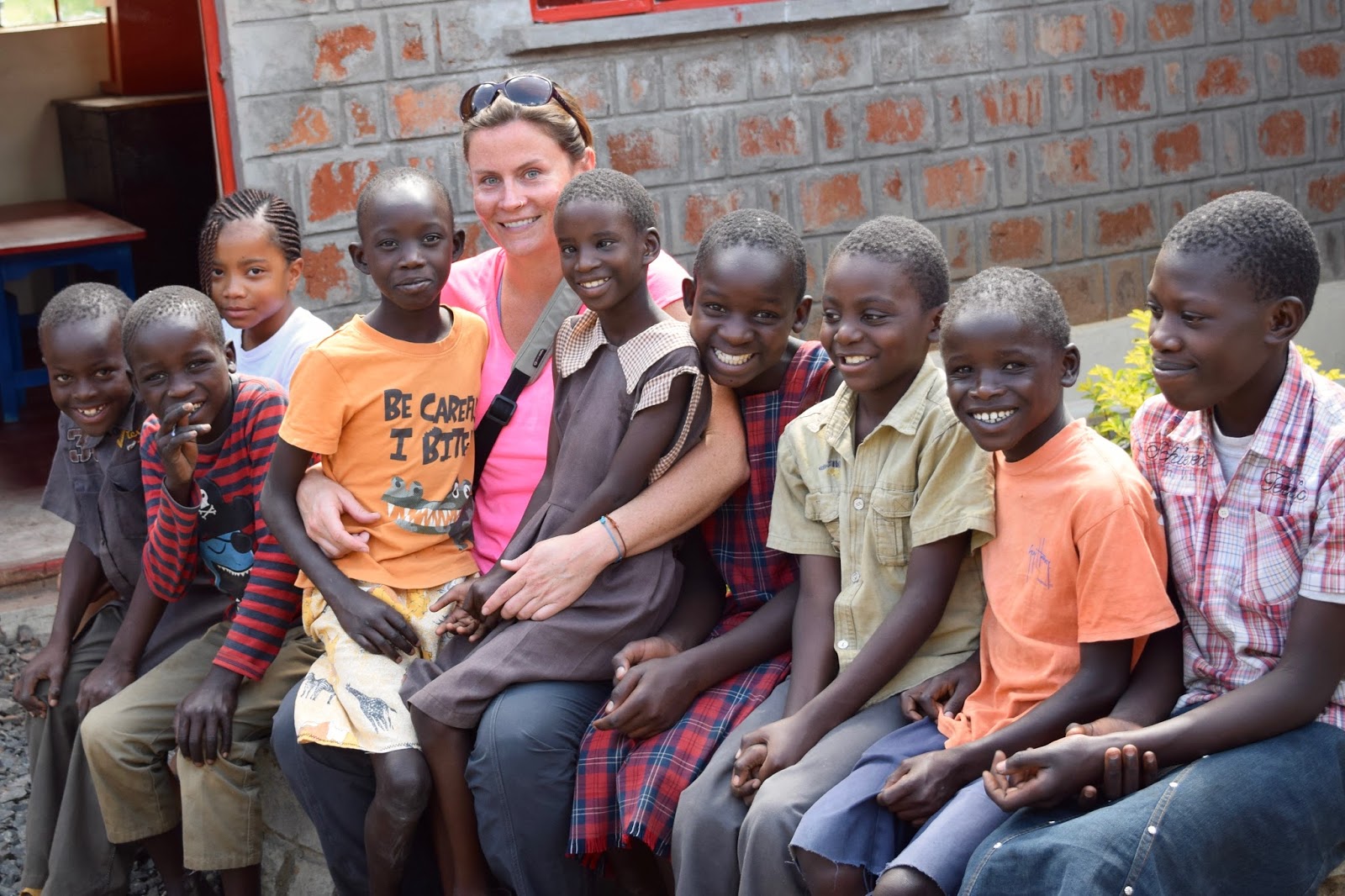
More than any professional skill set I thought I’d be using, I spend my days among the children.  In addition to a handful of staff children on the property, there are 9 orphans living here, most of whom arrived as babies.  They average around 9 years old, though very few if any of them know their actual date of birth.  They are demonstrative in their affection, laugh often, and have a voracious appetite for learning; each the embodiment of the kind of person I want to become.  I have a lot to learn.

Sunday, January 10, 2016

Out Of The West


I wasn’t entirely ready to say goodbye to Greece.  There’s a lustiness, a boldness of spirit there that I just couldn’t get enough of.  It made me feel empowered, and brave, and so very excited.  For everything.  Excited to breathe deeply of the dirty air, and to get lost, and to love well.  Excited to dance my ass off, and to pursue beauty, and to laugh often.  Put simply, Greece and her people have breathed into me an even more voracious appetite for life, a wild longing of sorts.  And I love it.

There are so many Greek qualities I want to remember, to hold onto, to take with me.  I want to be demonstrative in my affection for those I love.  I want to speak my mind openly, without fear of judgment or rejection.  I want to continue to value and seek learning in all its forms.  I want to continue to discover cities from the back of a motorcycle (thanks, Vasily).  I want to pursue creativity always, believing this to be as fundamental to our development as where we choose to live, or what we do for work.  I want to remember, even through the grit and pain of daily life, what a gift it is to really live.

So while I couldn’t help but feel sadness, it wasn’t without deep joy and gratitude that I made my final European farewell.  Gratitude to Greece for the wildness she brought out in me.  To Europe, for teaching me how to do this thang on my own.  Mostly though, gratitude to my people.  To the people at home who continue to tangibly love me well in their consistent support and encouragement.  And to the people I’ve met along the way, who help me to believe in laughing, and dancing, and getting lost.  Who have been, to me, proof of hope, and magic, and real, live beauty
It was the perfect gift, to send me with such a full heart into Kenya, where the blazing equatorial sun asserted itself even before we touched down in Nairobi.  I found my driver, and did my best to breathe deeply of the filthy air as we found our way to the car.  I plopped my exhausted, sweaty self into the backseat as James entered into what can only be described as straight up traffic madness.  Nonplussed, he adjusted the radio and promptly began belting along to the first song he found, “A Whole New World”.  I couldn’t help but chuckle.  A whole new world indeed, I thought to myself.  Bring it on.